
Imagine the blazing April sun in Thailand. The air shimmers with heat, yet laughter echoes through the streets as people—young and old—splash water with joyous abandon. Welcome to Songkran, Thailand's most beloved celebration of renewal, community, and cultural pride.
This year, Songkran feels more significant than ever. The festival now holds UNESCO Intangible Cultural Heritage of Humanity status, cementing what Thai people have always known: this is one of the world's great living traditions.
A Festival Rooted in Ancient Rituals
Songkran (สงกรานต์), derived from the Sanskrit word saṅkrānti, means "astrological passage" – the passing of time, the turning of the year. It marks the traditional Thai New Year, celebrated from 13th to 15th April 2026, with festivities beginning earlier and running longer in many regions.
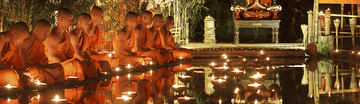
Before Thailand adopted the Gregorian calendar in 1940, Songkran was the official start of the year – ushering in a time of reflection, cleansing, and blessings. At its heart, it remains a deeply spiritual festival, rooted in Buddhist and Brahmin traditions. It's a time to honour ancestors, visit temples, and seek blessings for the year ahead.
While tourists may be most familiar with the exuberant water fights, Songkran's soul lies in the quieter, more symbolic acts: washing away the old and welcoming the new.
The Symbolism of Water: More Than a Splash
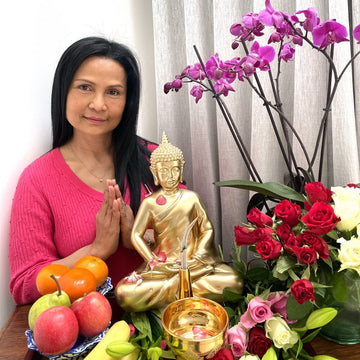
Water is the most iconic element of Songkran – and with good reason. In Thai culture, water symbolises purification and renewal. Traditionally, scented water infused with herbs or flower petals (often jasmine or marigold) was used to clean Buddha statues and sprinkle on the hands of elders to bring good fortune.
Over the years, this evolved into the thrilling nationwide water battles we see today – but the essence remains the same: a fresh start, a joyful cleansing of the spirit and celebration of life.
 Songkran Traditions: Then and Now
Making Merit at Temples
Mornings during Songkran are typically reserved for visiting temples, where people make merit by offering food to monks, pouring scented water over Buddha images, and building small sand pagodas in temple courtyards – symbolising the return of soil accidentally carried away from sacred grounds over the year.
Rod Nam Dam Hua: Honouring Elders
Family is central to Songkran. Many Thais return to their hometowns to spend time with loved ones. A cherished custom is Rod Nam Dam Hua, where younger generations pour scented water over the hands of parents and grandparents while offering blessings and well wishes. It is one of the most tender and beautiful moments of the festival.
The Water Fights: Modern Revelry
Of course, modern Songkran is known worldwide for its epic water battles. In cities like Chiang Mai, Bangkok, and Phuket, the streets become joyful battlegrounds with water guns, hoses, and buckets.
Even as a seasoned traveller, nothing quite prepared me for my first full-on Songkran in Chiang Mai. I was soaked to the skin within five minutes with a belly full of laughter! Locals, tourists, strangers and friends, all united in a joyful chaos. It's truly an incredible time you need to experience at least once in your lifetime.

Songkran 2026: What's Happening & Where
The Tourism Authority of Thailand (TAT) has confirmed the full nationwide programme for 2026. The official public holiday runs 13–15 April, but celebrations extend well beyond those dates in many regions. With the weekend falling just before the festival, this year is shaping up to be one of the busiest and most vibrant Songkrans in recent memory.
Bangkok is hosting an extraordinary range of events:
-
Maha Songkran World Event – 11–15 April, Benjakitti Park
-
ICONSIAM Thaiconic Songkran Celebration – 10–15 April, River Park at ICONSIAM
-
Songkran at Silom Road – 12–14 April (one of Bangkok's most iconic water-fight streets)
-
Siam Songkran Festival – 12–15 April, Siam Square
-
SIAM Songkran Music Festival – 11–14 April, featuring international headliners
Chiang Mai in the North extends celebrations longer than most, blending traditional Lanna cultural ceremonies with the famous moat water battles.
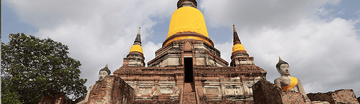
Ayutthaya offers a more reflective experience – heritage temple ceremonies against the backdrop of ancient ruins, including the signature elephant water-splashing event.
Chon Buri celebrates the Wan Lai tradition, extending the festivities for several days beyond the main dates – a wonderful option if you want to avoid the busiest crowds.
Phuket and Surat Thani in the South bring beachside Songkran, combining water fun with sunshine and coastal celebrations.
Songkran is also celebrated in Laos, Myanmar, Cambodia, and the Yunnan region of China around the same dates – a reminder that this is truly a shared cultural heritage across Southeast Asia.
Traditional Dishes of Songkran
Songkran is as much a culinary celebration as it is spiritual and social. Here are a few beloved dishes often shared during the holiday:
-
Khao Chae – A refined, cooling dish of jasmine rice soaked in scented iced water, served with delicate savoury accompaniments. Perfect for April's heat.
-
Som Tum – Green papaya salad that brings fire and freshness to any family table.
-
Pla Tod Nam Pla – Crispy fried fish glazed with fish sauce, often paired with mango or green apple salad.
-
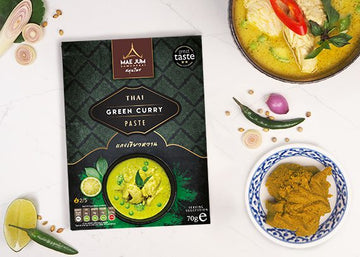
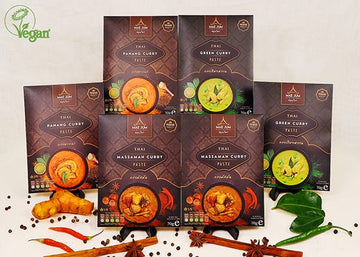
Gaeng Keow Wan (Green Curry) – Full of fragrant herbs and bright Thai eggplant, this is the taste of home for so many Thai families. Try it with Mae Jum's Thai Green Curry Paste for an authentic, effortless result.
👉 Inspired to cook? Explore Mae Jum's full collection of Thai recipes
How to Join Songkran Respectfully: A Guide for Visitors
Songkran is one of the world's most welcoming festivals – but joining with cultural awareness makes the experience richer for everyone.
-
Protect your belongings – Waterproof bags are essential. Accept that you will get soaked.
-
Dress modestly – Lightweight clothes are ideal; swimwear alone in public streets is not appropriate.
-
Know who not to splash – Never throw water at monks, elders, babies, or police officers on duty. Splashing directly on someone's face or head is also considered disrespectful.
-
Keep it clean – Never throw dirty or muddy water.
-
Skip the super-soakers – High-pressure water guns are not welcome; keep the fun gentle.
-
Understand the roots – The water isn't just for fun. It's a blessing. Approach it with that spirit.
-
Learn how to say ‘Sawadee Pe Mai’ or ‘Sawadee Pe Mai Thai’ which means happy new year or happy Thai new year. To show good manners you can add ‘Krap’ (male) or ‘Ka’ (female) to the end of the sentence
Travel tip: Book transport and accommodation well in advance. The extended holiday weekend in 2026 means this is one of the busiest domestic travel periods of the year in Thailand.
Songkran reminds us that renewal isn't just a feeling; it's a practice. A choice to wash away what no longer serves us, to gather with the people we love, and to meet the new year with open hands. Thailand has been doing this for centuries. This year, wherever you are in the world, you're invited to do the same.
Sawasdee Pee Mai – สวัสดีปีใหม่ – Happy New Year.